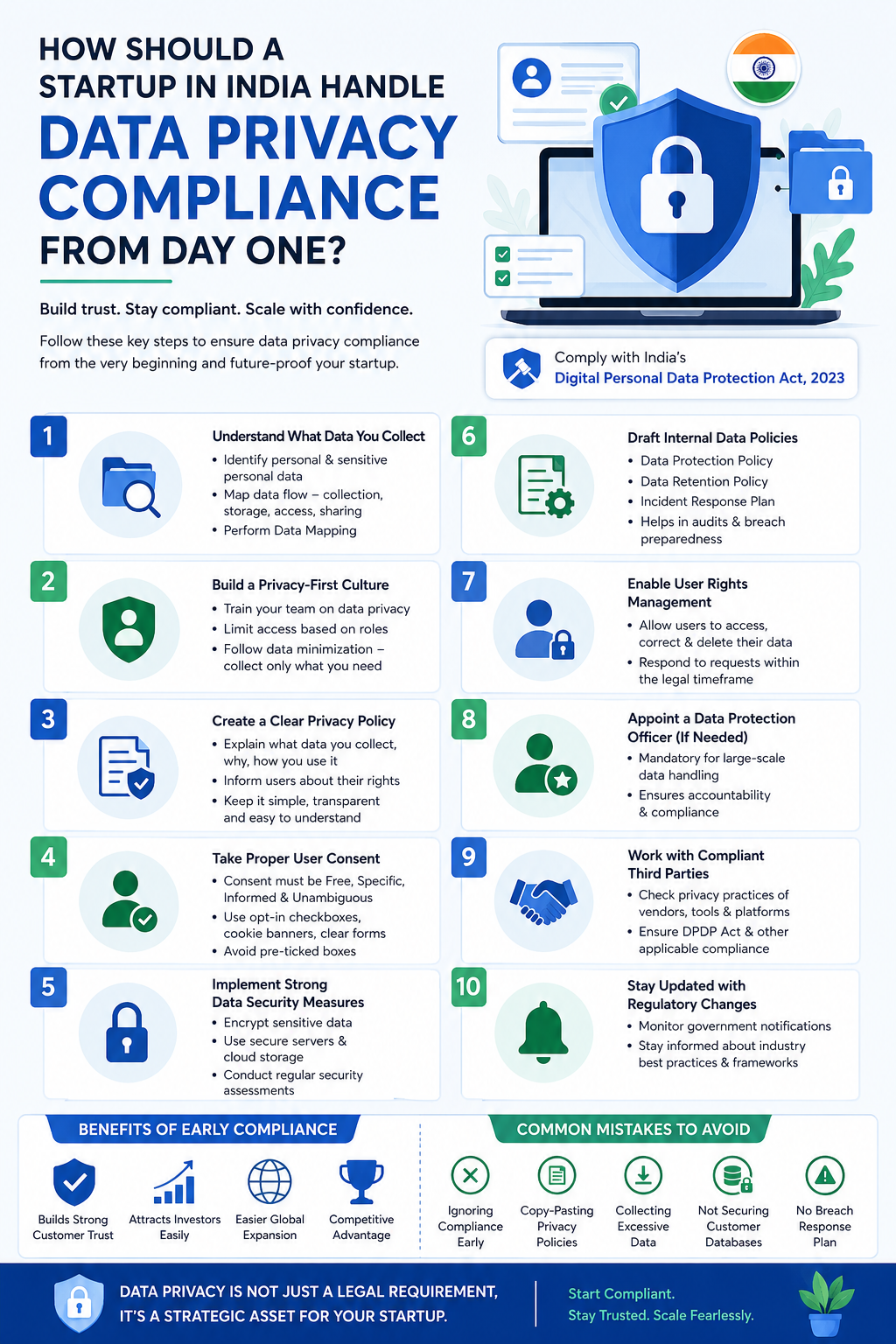
How Should a Startup in India Handle Data Privacy Compliance from Day One

  • 2026-05-06
  • Suneel
In today’s digital-first ecosystem, data is not just an asset—it’s a responsibility. For startups in India, ignoring data privacy compliance can lead to legal risks, financial penalties, and loss of customer trust. The good news? If you build compliance into your business from day one, it becomes a growth advantage rather than a burden. Let’s break down how Indian startups can handle data privacy compliance effectively—while staying lean and scalable. Why Data Privacy Compliance Matters for Startups With increasing awareness and regulations, customers now expect transparency and security. Laws like the Digital Personal Data Protection Act, 2023 and global frameworks such as General Data Protection Regulation have made it essential for startups to adopt strong data governance practices early. Ignoring compliance can result in: Heavy penalties Loss of investor confidence Reputational damage Operational disruptions

How IT Compliance Services Improve Customer Trust and Data Protection

  • 2026-05-07
  • suneel
In today’s digital world, businesses handle massive amounts of customer data every day. From financial records and personal details to payment information and confidential business files, protecting data has become more important than ever. This is where IT compliance services play a crucial role. Companies that follow proper IT compliance standards not only protect sensitive information but also build strong customer trust and business credibility

What are the latest updates regarding the gift tax issued by the Income Tax Department in India

  • 2026-05-08
  • suneel
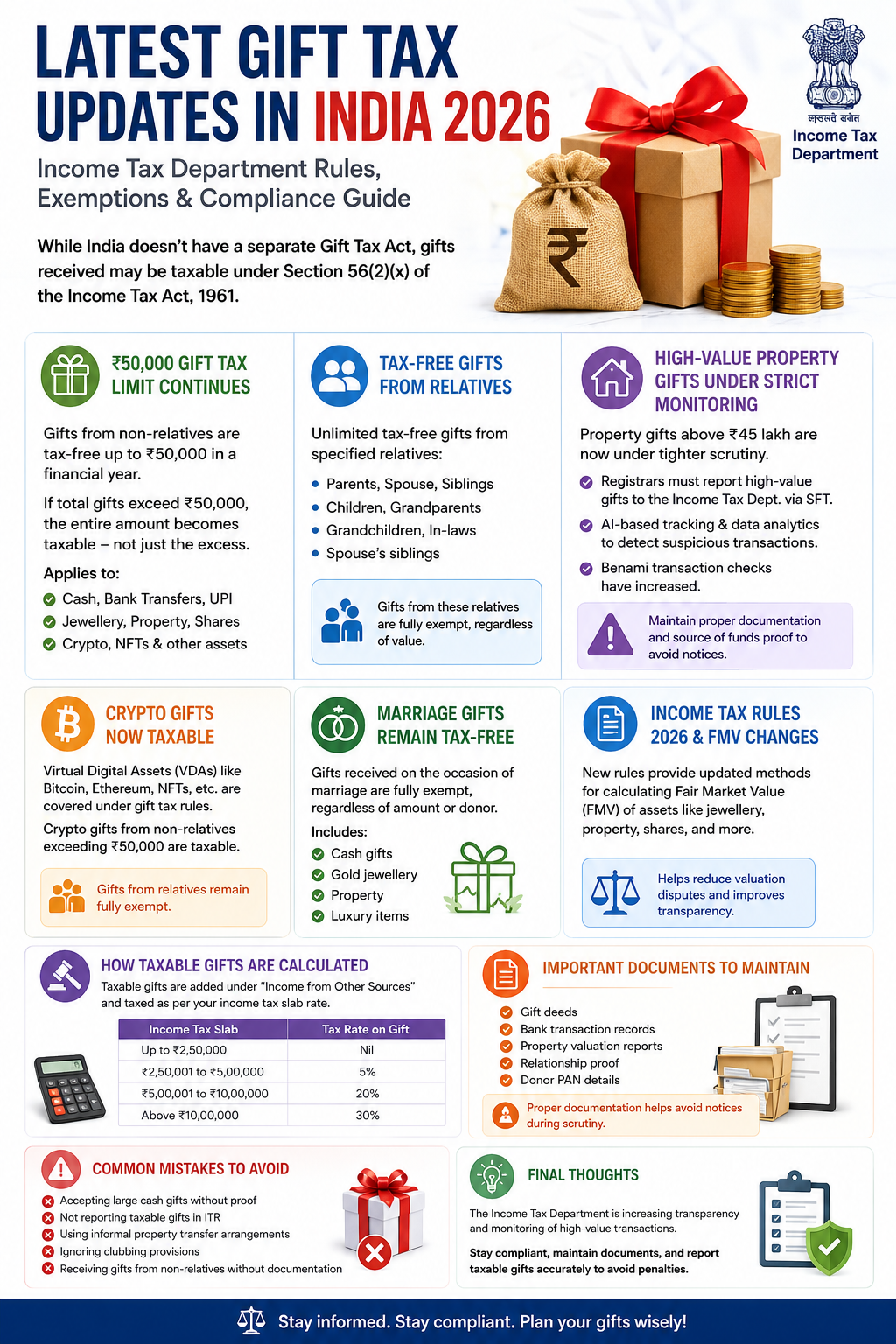
Gift taxation in India has become a major focus area for the Income Tax Department in 2026. With stricter reporting rules, new Income Tax Rules 2026, and increased scrutiny on high-value transactions, taxpayers must understand how gift tax provisions work under Section 56(2)(x) of the Income Tax Act. Although India does not have a separate “Gift Tax Act” anymore, gifts received in cash, property, jewellery, shares, crypto, or other assets can still be taxable under “Income from Other Sources.” The latest amendments and compliance measures are aimed at preventing tax evasion and improving financial transparency. What Is Gift Tax in India? The Gift Tax Act was abolished in 1998. However, gift taxation now falls under Section 56(2)(x) of the Income Tax Act, 1961. Under this provision, gifts received without consideration or at a lower-than-market value may become taxable if they exceed prescribed limits.

How Do I File My Tax Return? A Complete Step-by-Step Guide for 2026

  • 2026-05-09
  • suneel
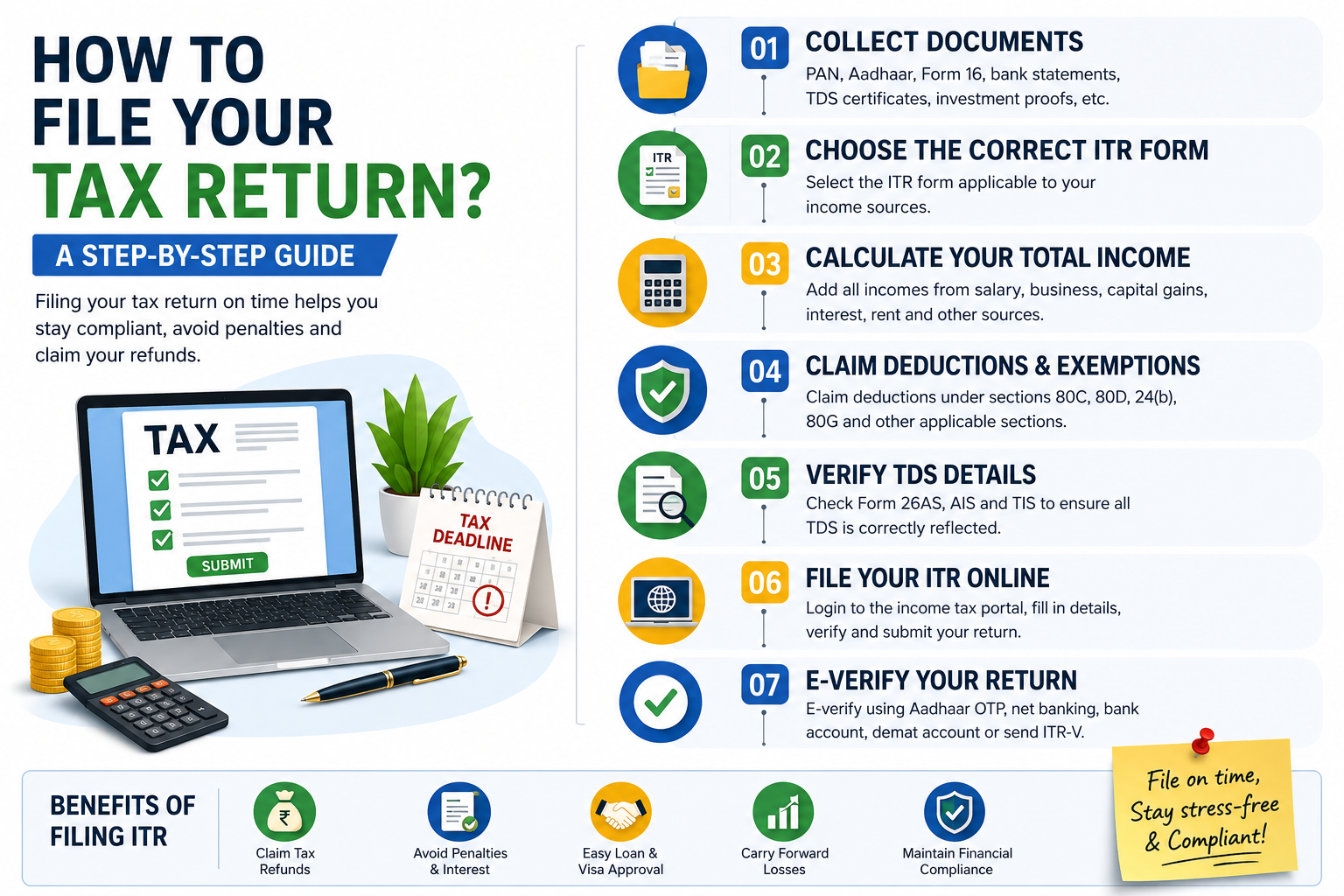
Filing your income tax return may sound complicated, but with the right process, it becomes simple and stress-free. Whether you are a salaried employee, freelancer, business owner, or professional, filing your tax return on time helps you stay compliant, claim refunds, and avoid penalties. In this guide, we’ll explain how to file your tax return in India step by step using easy language. What Is an Income Tax Return (ITR)? An Income Tax Return (ITR) is a form submitted to the Income Tax Department where you report: Your total income Tax paid during the year Deductions and exemptions claimed Refunds or taxes due Filing an ITR is mandatory if your income exceeds the basic exemption limit or if you meet certain financial criteria.