
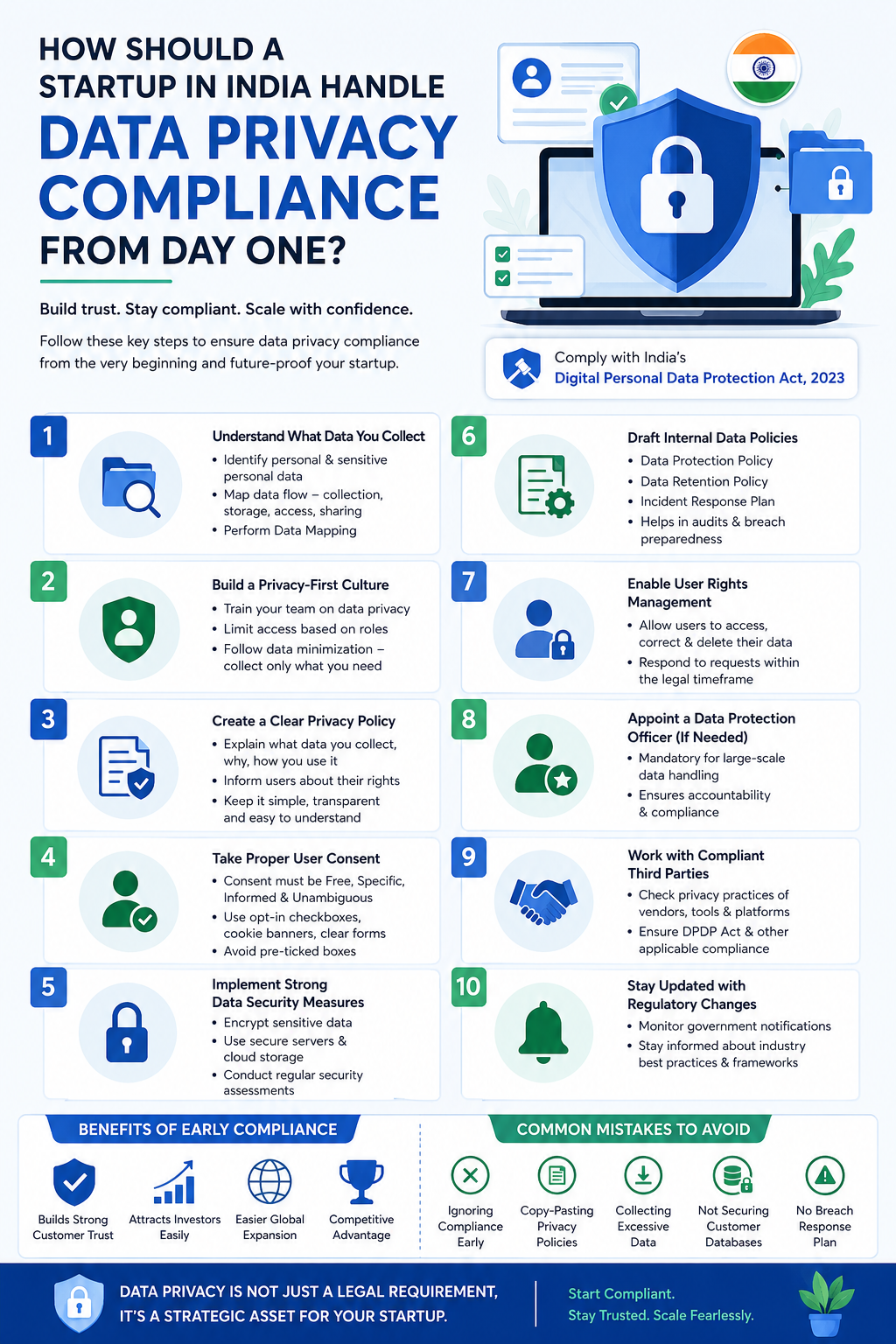
In today’s digital-first ecosystem, data is not just an asset—it’s a responsibility. For startups in India, ignoring data privacy compliance can lead to legal risks, financial penalties, and loss of customer trust. The good news? If you build compliance into your business from day one, it becomes a growth advantage rather than a burden. Let’s break down how Indian startups can handle data privacy compliance effectively—while staying lean and scalable. Why Data Privacy Compliance Matters for Startups With increasing awareness and regulations, customers now expect transparency and security. Laws like the Digital Personal Data Protection Act, 2023 and global frameworks such as General Data Protection Regulation have made it essential for startups to adopt strong data governance practices early. Ignoring compliance can result in: Heavy penalties Loss of investor confidence Reputational damage Operational disruptions
Step-by-Step Guide to Data Privacy Compliance in India
1. Understand What Data You Collect
Start by identifying:
- Personal data (name, email, phone)
- Sensitive personal data (financial details, health info)
Map your data flow:
- Where is data collected?
- Where is it stored?
- Who has access?
👉 This process is called Data Mapping, and it forms the foundation of compliance.
2. Build a Privacy-First Culture
From day one, embed privacy into your operations:
- Train your team on data handling
- Limit access based on roles
- Follow the principle of data minimization (collect only what you need)
3. Create a Clear Privacy Policy
Your website/app must have a transparent privacy policy that explains:
- What data you collect
- Why you collect it
- How you use it
- How users can control their data
-
4. Take Proper User Consent
Under Indian law, consent must be:
- Free
- Specific
- Informed
- Unambiguous
-
Use:
- Opt-in checkboxes
- Cookie banners
- Clear consent forms
-
Avoid pre-ticked boxes—they can get you into trouble.
5. Implement Strong Data Security Measures
Security is non-negotiable. Ensure:
- Encryption of sensitive data
- Secure servers/cloud storage
- Regular vulnerability assessments
-
You can align with standards like ISO/IEC 27001 to strengthen credibility.
6. Draft Internal Data Policies
Create internal documents like:
- Data Protection Policy
- Data Retention Policy
- Incident Response Plan
-
This helps your startup stay prepared for audits and breaches.
7. Enable User Rights Management
Under the Digital Personal Data Protection Act, 2023, users have rights such as:
- Access their data
- Correct inaccuracies
- Request deletion
-
You should have a system to handle such requests efficiently.
8. Appoint a Data Protection Officer (If Needed)
For startups handling large-scale data:
- Assign a responsible person (DPO)
- Ensure accountability
-
Even if not mandatory, this builds trust with investors and users.
9. Work with Compliant Third Parties
If you use:
- Payment gateways
- SaaS tools
- Marketing platforms
-
Ensure they are also compliant. Your liability doesn’t end with outsourcing.
10. Stay Updated with Regulatory Changes
Data privacy laws are evolving quickly. Keep track of:
- Government notifications
- Industry updates
- Compliance frameworks
-
Common Mistakes Startups Should Avoid
- Ignoring compliance until scaling
- Copy-pasting privacy policies
- Collecting excessive data
- Not securing customer databases
- No breach response plan
-
Benefits of Early Compliance
Handling data privacy correctly from day one gives you:
- Strong brand trust
- Easier fundraising (investors check compliance)
- Competitive advantage
- Smooth global expansion
-
Conclusion
For Indian startups, data privacy compliance is not just a legal requirement—it’s a strategic asset. By integrating privacy into your business model early, you reduce risks and build long-term credibility.
If you’re building a startup, think of compliance not as a cost—but as an investment in trust.