
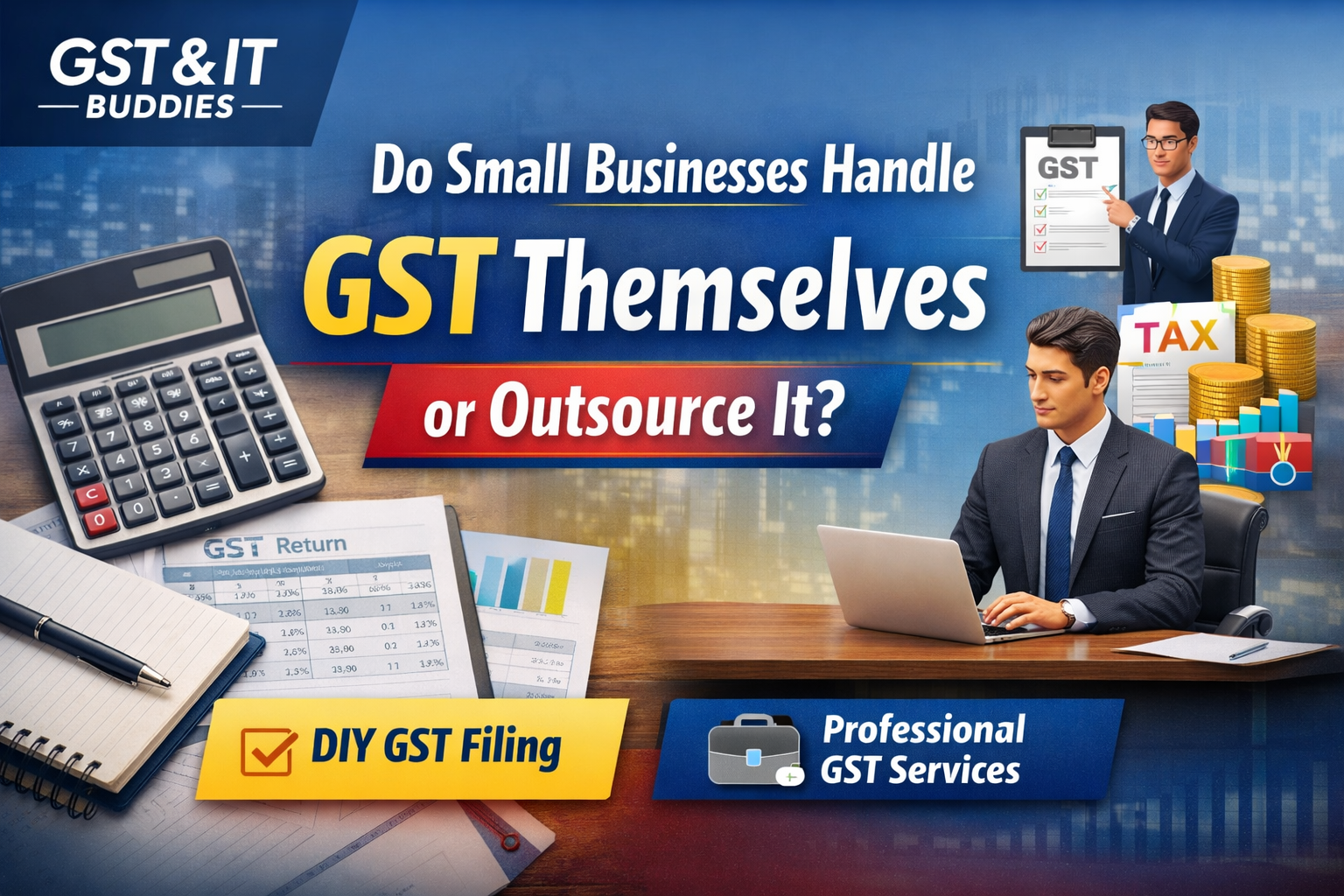
Goods and Services Tax (GST) compliance is one of the most critical responsibilities for small businesses in India. From GST registration to filing returns and maintaining records, the process can be time-consuming and complex. A common question many entrepreneurs ask is—should they manage GST on their own or outsource it to professionals?
Do Most Small Businesses Handle GST Themselves?
In the early stages, many small business owners prefer to handle GST compliance themselves. With the help of basic accounting software and online tutorials, tasks like invoice generation, GST return filing (GSTR-1, GSTR-3B), and simple reconciliations seem manageable. This approach is more common among freelancers, small traders, and startups with limited transactions, as it helps save professional fees.
However, as business operations grow, GST compliance becomes more complicated. Frequent changes in GST rules, risk of penalties, and the need for accurate filings make self-handling increasingly challenging.
Why Do Businesses Choose to Outsource GST?
A large number of growing small and medium businesses prefer outsourcing GST services to professionals such as Chartered Accountants or GST consultants. This is mainly due to the complexity and risk involved in compliance.
Key Reasons for Outsourcing:
-
Accuracy & Compliance: Professionals ensure error-free GST return filing and compliance with the latest rules.
-
Time-Saving: Business owners can focus on growth instead of paperwork.
-
Avoid Penalties: Late filing, incorrect ITC claims, or mismatches can lead to heavy fines.
-
Expert Advice: Guidance on tax planning, input tax credit optimization, and notices handling.
-
Handling Notices: Experts can manage GST scrutiny, audits, and departmental queries effectively.
Cost vs Value: What’s Better?
While handling GST yourself may save money initially, errors can cost significantly more in penalties and lost input tax credit. Outsourcing, on the other hand, is an investment that ensures peace of mind and long-term compliance.
Which Option is Right for You?
Handle GST Yourself if:
-
You have very few transactions
-
Your business is small or newly started
-
You understand GST basics well
Outsource GST if:
-
Your business is growing
-
You deal with multiple invoices or states
-
You want to avoid legal risks and focus on operations
Conclusion
In reality, most small businesses start by managing GST themselves but gradually shift to outsourcing as they grow. GST compliance is not just about filing returns—it’s about accuracy, strategy, and staying updated with changing regulations. For long-term success, outsourcing GST services often proves to be the smarter choice.