

Deductions Under Section 80C, 80D & 80CCD Explained

  • 2026-08-05
  • suneel
Paying income tax is a legal responsibility, but paying more tax than required is not. The Income Tax Act provides several deductions that allow taxpayers to reduce their taxable income through eligible investments and expenses. Among the most popular tax-saving provisions are Section 80C, Section 80D, and Section 80CCD. These deductions are especially beneficial for salaried employees, self-employed professionals, and business owners who opt for the old tax regime. In this guide, we'll explain how these sections work, who can claim them, their deduction limits, and practical tips to maximize your tax savings.

Is GST Registration Mandatory for a Private Limited Company?

  • 2026-08-06
  • suneel
The answer is not always. While many private limited companies are required to obtain GST registration, it depends on the nature of the business, turnover, and specific GST provisions. In this guide, we'll explain everything you need to know in simple language.

How to Calculate TDS on Salary in India | AY 2026–27 Guide

  • 2026-08-07
  • suneel
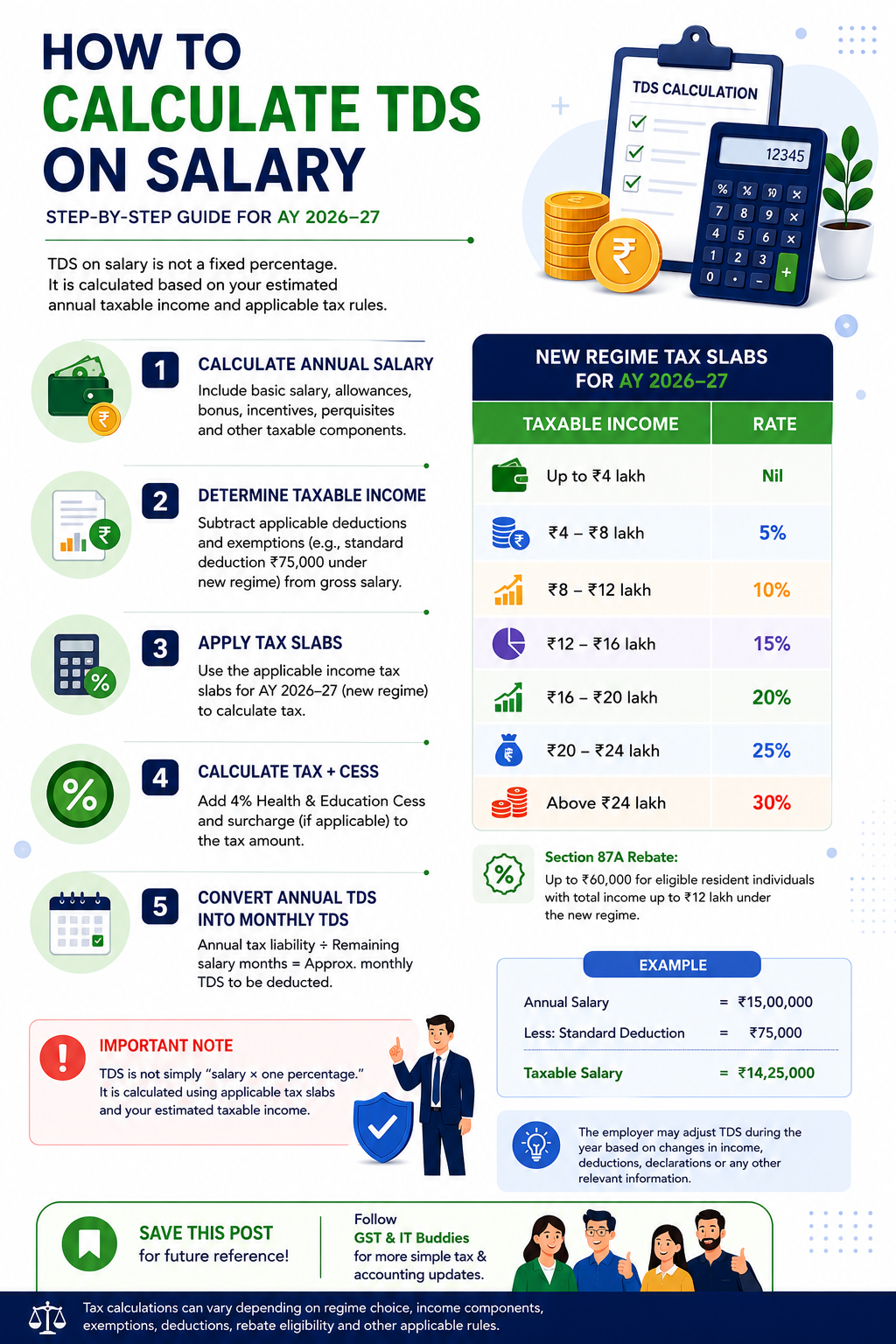
Introduction Tax Deducted at Source (TDS) on salary is an important part of payroll and income-tax compliance. If you are a salaried employee, you may notice TDS being deducted from your salary every month. But how is TDS on salary actually calculated? It is not simply a matter of applying one fixed percentage to your monthly salary. Under Section 192, the employer calculates TDS based on the employee's estimated taxable salary and the applicable income-tax rates for the financial year. The employer can also adjust deductions during the year to account for excess or short deduction in earlier months. Let's understand the process step by step.

difference between cash flow and profit, cash flow management, business profitability, profit and cash flow, financial management

  • 2026-08-07
  • suneel
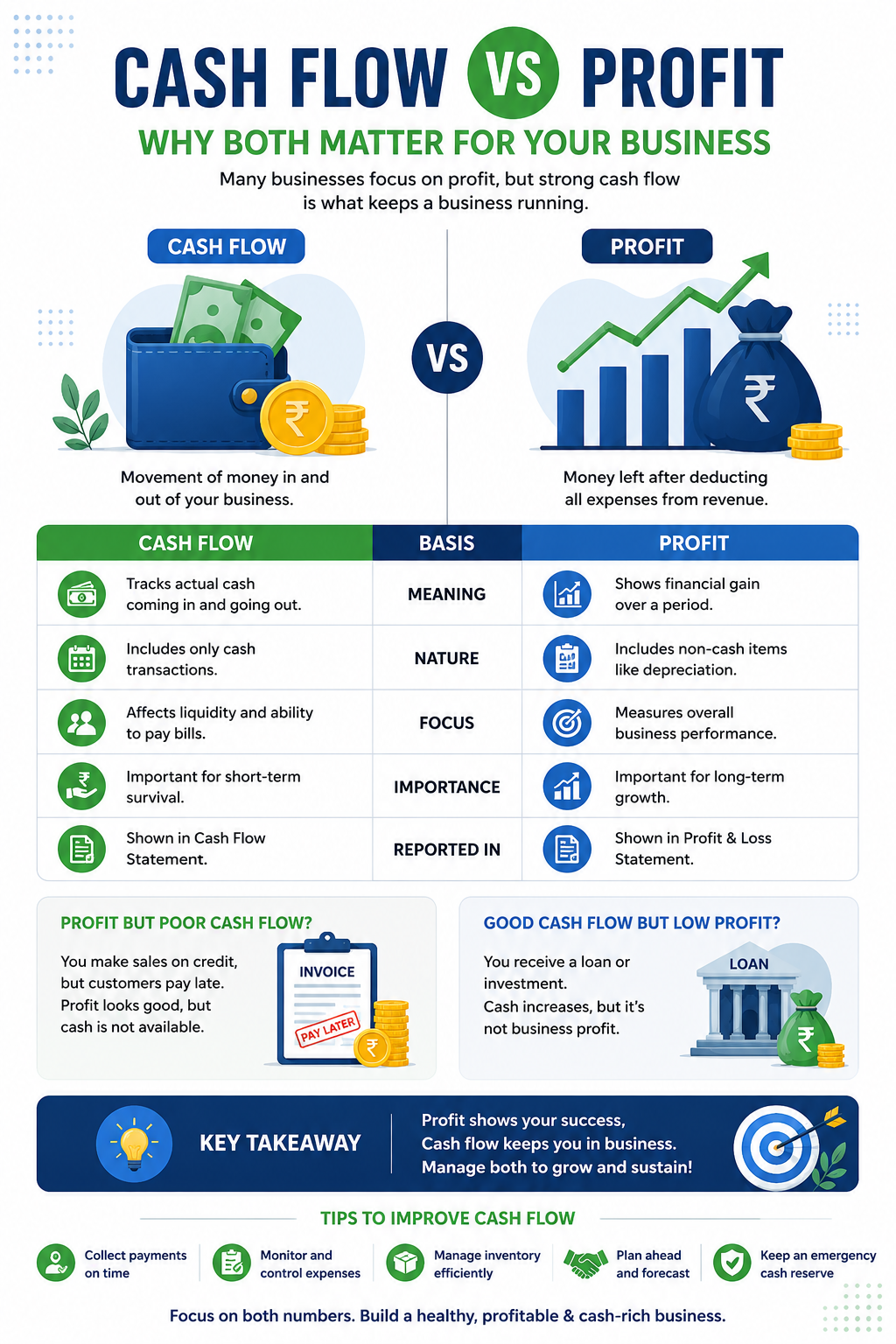
Introduction For many business owners, profit and cash flow may appear to mean the same thing. However, they measure two very different aspects of a business's financial health. A company can report a healthy profit but still struggle to pay its bills because cash has not yet been collected from customers. Similarly, a business may have plenty of cash available while generating little or no profit. Understanding cash flow vs profit is therefore essential for making better financial decisions, managing working capital, and maintaining the long-term stability of a business. In this article, we explain the difference between cash flow and profit, how they are calculated, why both matter, and how businesses can monitor them effectively.