


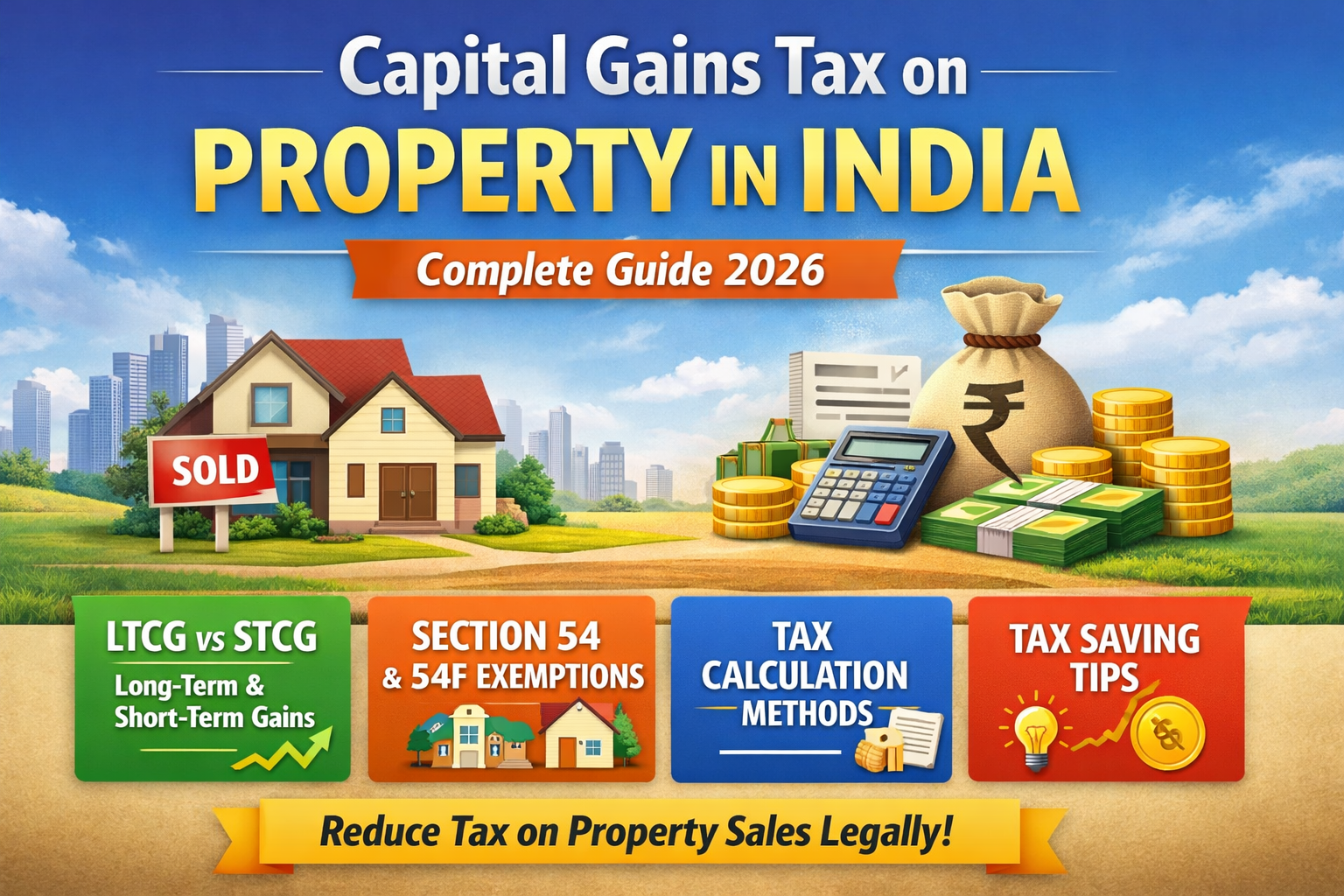
Selling a property can bring significant profit, but it also comes with a tax liability known as Capital Gains Tax on Property. Whether you’re a homeowner, investor, or business owner, understanding how capital gains tax works in India is crucial to avoid penalties and save money legally. In this complete guide, you’ll learn about LTCG (Long-Term Capital Gains), STCG (Short-Term Capital Gains), tax calculation, exemptions under Section 54 & 54F, and smart tax-saving strategies. 📊 What is Capital Gains Tax on Property? Capital Gains Tax is the tax you pay on the profit earned from selling a property such as land, house, or commercial real estate. 👉 Formula: Capital Gain = Selling Price – Purchase Price – Expenses This gain is categorized into: Short-Term Capital Gain (STCG) Long-Term Capital Gain (LTCG)
⏳ Short-Term vs Long-Term Capital Gains
🔹 Short-Term Capital Gain (STCG)
- Property held for less than 24 months
- Taxed as per your income tax slab
- No indexation benefit
🔹 Long-Term Capital Gain (LTCG)
- Property held for more than 24 months
- Taxed at 20% with indexation benefit
- Eligible for exemptions under Section 54 & 54F
🧮 How to Calculate Capital Gains on Property
Step-by-Step Calculation:
- Determine Sale Value
(Actual selling price or stamp duty value) - Deduct Cost of Acquisition
(Original purchase price) - Apply Indexation (for LTCG)
Adjust purchase price using Cost Inflation Index (CII) - Deduct Expenses
Brokerage, legal fees, stamp duty, etc.
👉 Final Formula:
LTCG = Sale Price – Indexed Cost – Expenses
📉 Indexation Benefit Explained
Indexation helps reduce your tax by adjusting the purchase price for inflation.
👉 Example:
If you bought property for ₹20 lakh and after indexation it becomes ₹35 lakh, your taxable gain reduces significantly.
🧾 Exemptions to Save Capital Gains Tax
🏡 Section 54 (For Residential Property)
- Applicable when you sell a residential house
- Must invest gains in another residential property
- Time limit:
- Buy within 1 year before or 2 years after sale
- Construct within 3 years
🏢 Section 54F (For Other Assets)
- Applies when you sell assets other than residential property
- Invest in one residential house
- Full exemption only if entire sale proceeds are invested
🏦 Capital Gains Account Scheme (CGAS)
If you cannot invest immediately, deposit your gains in a CGAS account to claim exemption.
💡 Tax-Saving Tips for Property Sellers
✔ Invest in another property under Section 54
✔ Use indexation to reduce taxable gain
✔ Plan your sale timing (after 24 months for LTCG benefits)
✔ Maintain all documents and expense proofs
✔ Utilize deductions legally
⚠️ Common Mistakes to Avoid
❌ Not considering stamp duty value
❌ Ignoring indexation benefits
❌ Missing exemption deadlines
❌ Not reporting capital gains in ITR
❌ Improper documentation
📅 Latest Updates for 2026
- Continued 20% LTCG tax with indexation
- Increased scrutiny on property transactions
- Mandatory reporting in Income Tax Return (ITR)
- Digital tracking of high-value transactions