


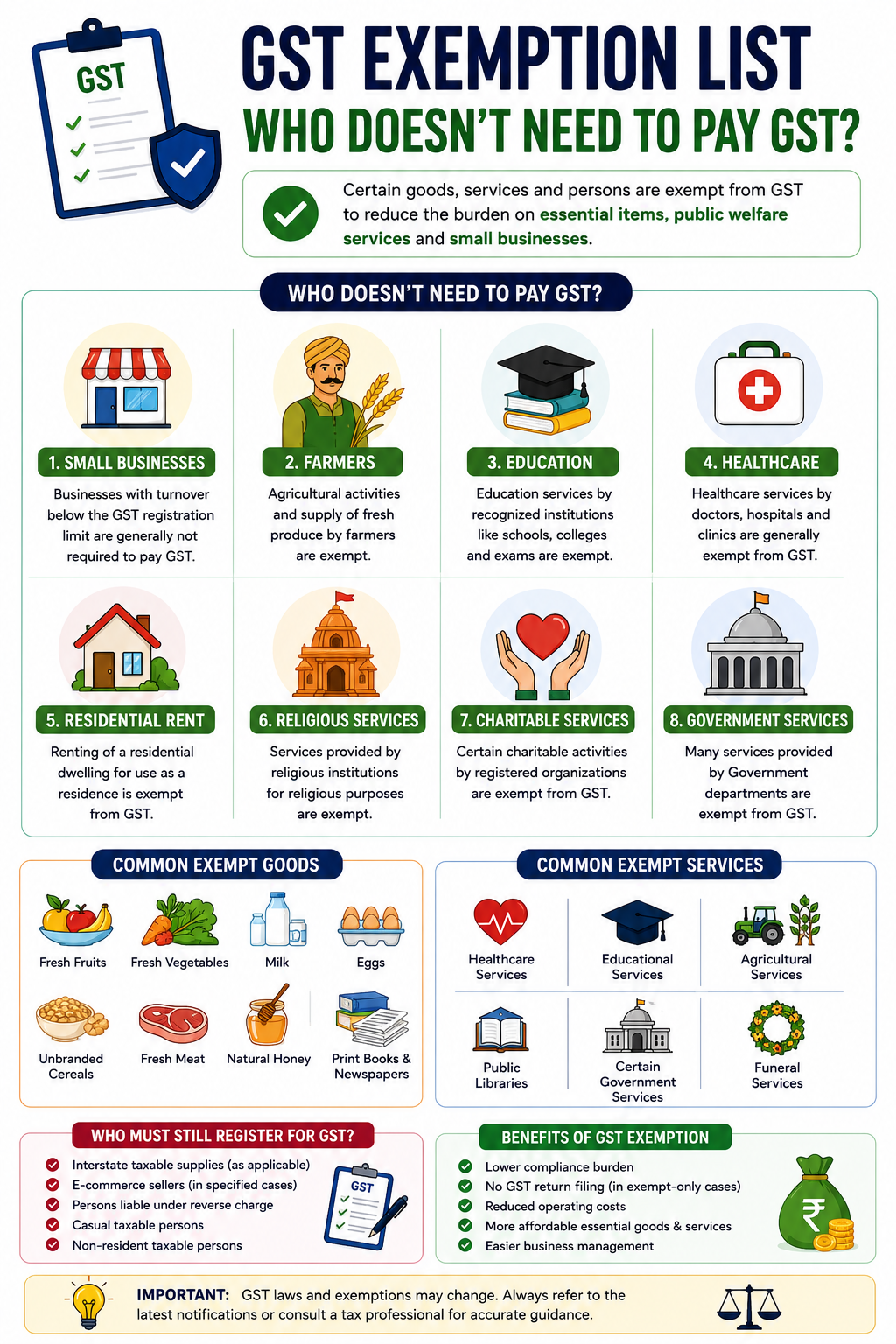
Goods and Services Tax (GST) is one of India's biggest indirect tax reforms. However, not every individual, business, product, or service is liable to pay GST. The government provides GST exemptions to reduce the tax burden on essential goods, public welfare services, and small businesses. If you're wondering "Who doesn't need to pay GST?", this guide covers everything you need to know.
What is GST Exemption?
A GST exemption means certain goods, services, or persons are not required to charge or pay GST under the GST Act.
There are mainly two types of exemptions:
- Absolute Exemption
- Conditional Exemption
Who Doesn't Need to Pay GST?
1. Small Businesses Below GST Registration Limit
Businesses are generally not required to register for GST if their aggregate annual turnover is below the prescribed threshold (subject to applicable rules and exceptions).
Examples include:
- Small retailers
- Local traders
- Freelancers below the threshold
- Small service providers
2. Farmers
Agricultural activities carried out by farmers are generally exempt from GST.
Examples:
- Cultivation of crops
- Supply of fresh produce
- Basic agricultural operations
3. Educational Institutions
Many educational services provided by recognized institutions are exempt.
Examples:
- School education
- College education
- Educational examinations
- Student-related services
4. Healthcare Services
Healthcare services by eligible medical professionals and clinical establishments are generally exempt.
Examples:
- Medical consultation
- Hospital treatment
- Diagnostic services
- Emergency healthcare
5. Residential House Rent
Renting of a residential dwelling for use as a residence is generally exempt in applicable cases.
6. Religious Services
Services provided by certain religious institutions may qualify for GST exemption.
Examples:
- Religious ceremonies
- Temple-related services
- Worship activities
7. Charitable Organizations
Certain charitable activities registered under applicable laws enjoy GST exemption.
Common GST Exempt Goods
Some commonly exempt goods include:
- Fresh fruits
- Fresh vegetables
- Milk
- Eggs
- Unbranded cereals
- Fresh meat
- Natural honey
- Salt
- Printed books
- Newspapers
Common GST Exempt Services
Examples include:
- Healthcare services
- Educational services
- Agricultural services
- Public libraries
- Certain government services
- Funeral services
Who Must Still Register for GST?
Even if turnover is low, registration may be required in specific situations under GST law, such as:
- Interstate taxable supplies (where applicable under current rules)
- E-commerce sellers in specified cases
- Persons liable under reverse charge
- Casual taxable persons
- Non-resident taxable persons
Always verify the latest GST provisions applicable to your business.
Benefits of GST Exemption
- Lower compliance burden
- No GST return filing in exempt-only cases
- Reduced operating costs
- Easier business management
- Better affordability for essential goods and services
Frequently Asked Questions (FAQs)
Is GST mandatory for every business?
No. Businesses below the applicable registration threshold and those dealing exclusively in exempt supplies may not be required to register, subject to GST rules.
Are doctors required to charge GST?
Most healthcare services provided by eligible medical professionals and hospitals are exempt.
Is GST charged on school fees?
Education services provided by eligible educational institutions are generally exempt.
Is GST applicable on fresh fruits and vegetables?
Fresh fruits and vegetables are generally exempt from GST.
Can an exempt business voluntarily register for GST?
Yes. Eligible businesses may choose voluntary registration, but they must comply with GST provisions after registration.
Conclusion
GST exemptions are intended to support essential sectors, reduce compliance for smaller businesses, and make important goods and services more affordable. Understanding whether your business, products, or services qualify for exemption can help you stay compliant while avoiding unnecessary tax obligations.
Before making business decisions, always review the latest GST notifications or consult a qualified tax professional, as GST rules and exemptions can change over time.