

The Goods and Services Tax (GST) framework in India continues to evolve to improve compliance, simplify taxation, and strengthen transparency for businesses. In 2026, several GST-related updates and compliance practices are expected to impact businesses of all sizes—from startups and MSMEs to large enterprises. Staying up to date with the latest GST changes is essential to avoid penalties, ensure smooth tax filing, and maintain healthy business operations. In this blog, we explore the key GST changes businesses should know in 2026 and how to prepare for them.
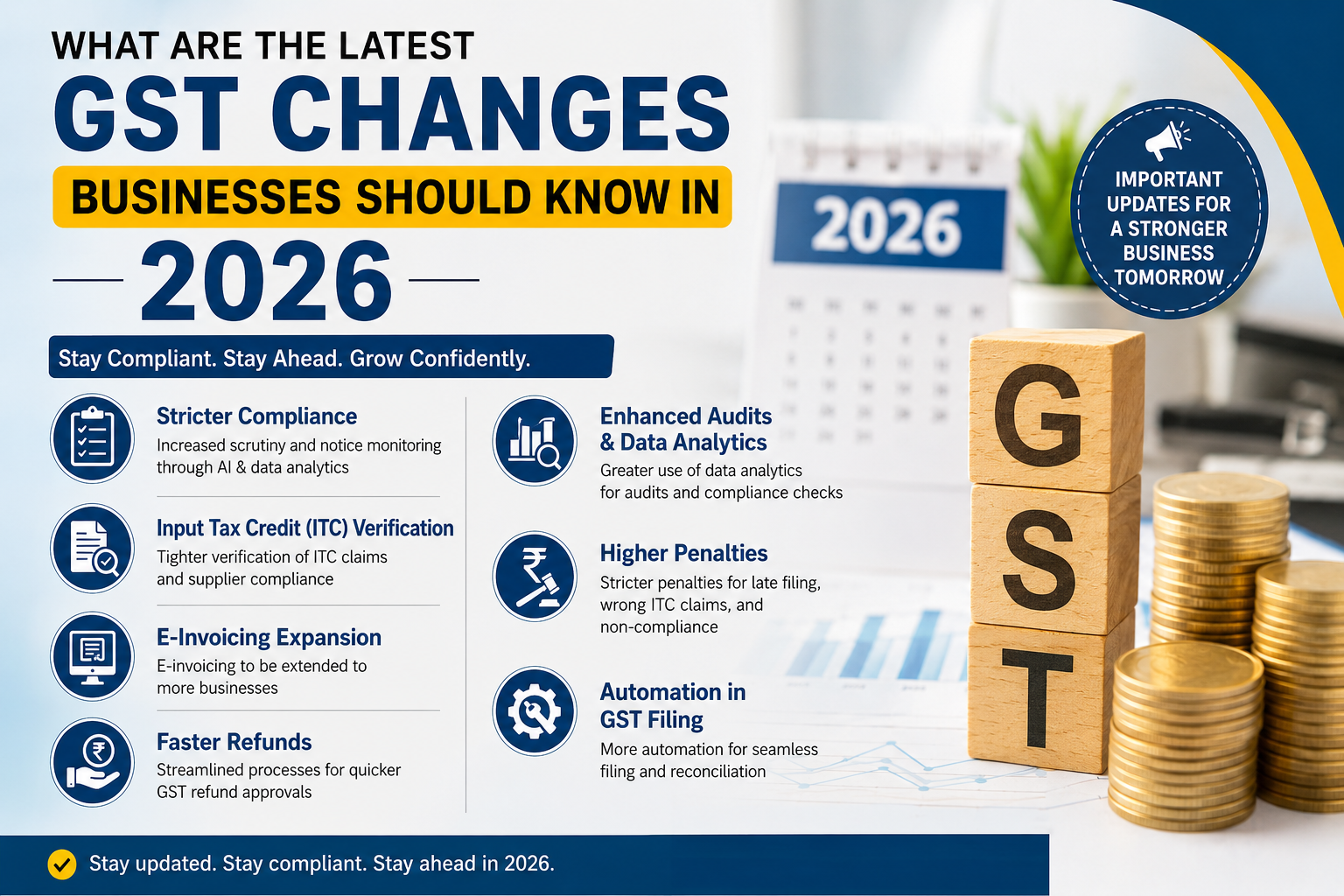
1. Stricter GST Compliance and Notice Monitoring
The government is increasingly focusing on GST compliance through automated systems and AI-based scrutiny. Businesses may receive notices for:
- Mismatch in GST returns
- Incorrect Input Tax Credit (ITC) claims
- Delayed GST filings
- Non-reconciliation of invoices
What Businesses Should Do:
- Regularly reconcile GSTR-1, GSTR-3B, and purchase records
- Monitor the GST portal notices frequently
- Maintain accurate accounting records
2. Increased Focus on Input Tax Credit (ITC) Verification
Input Tax Credit remains one of the most critical aspects of GST compliance. In 2026, businesses should expect tighter verification rules for ITC claims.
Key Areas of Focus:
- Supplier invoice matching
- Timely GST return filing by vendors
- Proper documentation for ITC claims
Best Practice:
Before claiming ITC, ensure suppliers have filed their GST returns correctly to avoid claim rejection.
3. E-Invoicing Expansion for More Businesses
The scope of e-invoicing may continue expanding to include businesses with lower turnover thresholds.
Why It Matters:
E-invoicing helps:
- Reduce invoice fraud
- Improve compliance accuracy
- Simplify tax reporting
Businesses should stay prepared by upgrading billing and accounting software to GST-compatible systems.
4. Enhanced GST Audits and Data Analytics
GST authorities are increasingly using data analytics to identify irregularities in tax filings.
Businesses Should Watch Out For:
- Unusual ITC claims
- Sudden turnover fluctuations
- Incorrect tax classifications
- Frequent amendments in returns
Maintaining transparent records and proper bookkeeping can help businesses avoid unnecessary scrutiny.
5. Faster GST Refund Processing
Exporters and eligible businesses may benefit from streamlined GST refund processes in 2026 due to increased digitalization.
Benefits:
- Faster working capital availability
- Reduced paperwork
- Improved cash flow management
Ensure all documents are filed correctly to avoid refund delays.
6. Greater Penalties for Non-Compliance
Authorities continue to take stricter action against delayed filings and tax evasion.
Common reasons for penalties include:
- Late GST return filing
- Wrong tax classification
- Fake invoicing
- Incorrect ITC utilization
Pro Tip:
Timely filing and regular compliance reviews can save businesses from costly penalties.
7. Automation in GST Filing
Businesses are increasingly adopting automated GST solutions to simplify compliance.
Advantages of GST Automation:
- Reduced manual errors
- Faster reconciliation
- Better compliance tracking
- Automated return preparation
Using accounting software integrated with GST can significantly reduce compliance risks.
How Businesses Can Stay GST-Compliant in 2026
To stay ahead of GST changes, businesses should:
✅ Maintain updated accounting records
✅ Reconcile GST returns regularly
✅ Verify supplier compliance before claiming ITC
✅ File returns before deadlines
✅ Consult tax professionals for compliance support
Final Thoughts
GST regulations are constantly evolving, and businesses that stay informed can avoid penalties while improving operational efficiency. Whether it is stricter compliance, e-invoicing expansion, or better ITC verification, understanding the latest GST developments in 2026 is essential for sustainable business growth.
If your business needs assistance with GST filing, compliance, or tax planning, professional guidance can help ensure hassle-free compliance and better financial management.