

Managing finances effectively is one of the biggest challenges for Small and Medium Enterprises (SMEs). Without a proper budget plan, businesses may struggle with cash flow issues, overspending, or missed growth opportunities. A well-structured budget helps SMEs control expenses, allocate resources efficiently, and achieve long-term financial stability.
Why Is Budget Planning Important for SMEs? A budget acts as a financial roadmap for your business. It helps SMEs:
Monitor income and expenses
Avoid unnecessary spending
Improve cash flow management
Prepare for unexpected expenses
Make informed financial decisions
Support business growth and profitability
Without proper budgeting, even profitable businesses can face financial difficulties.
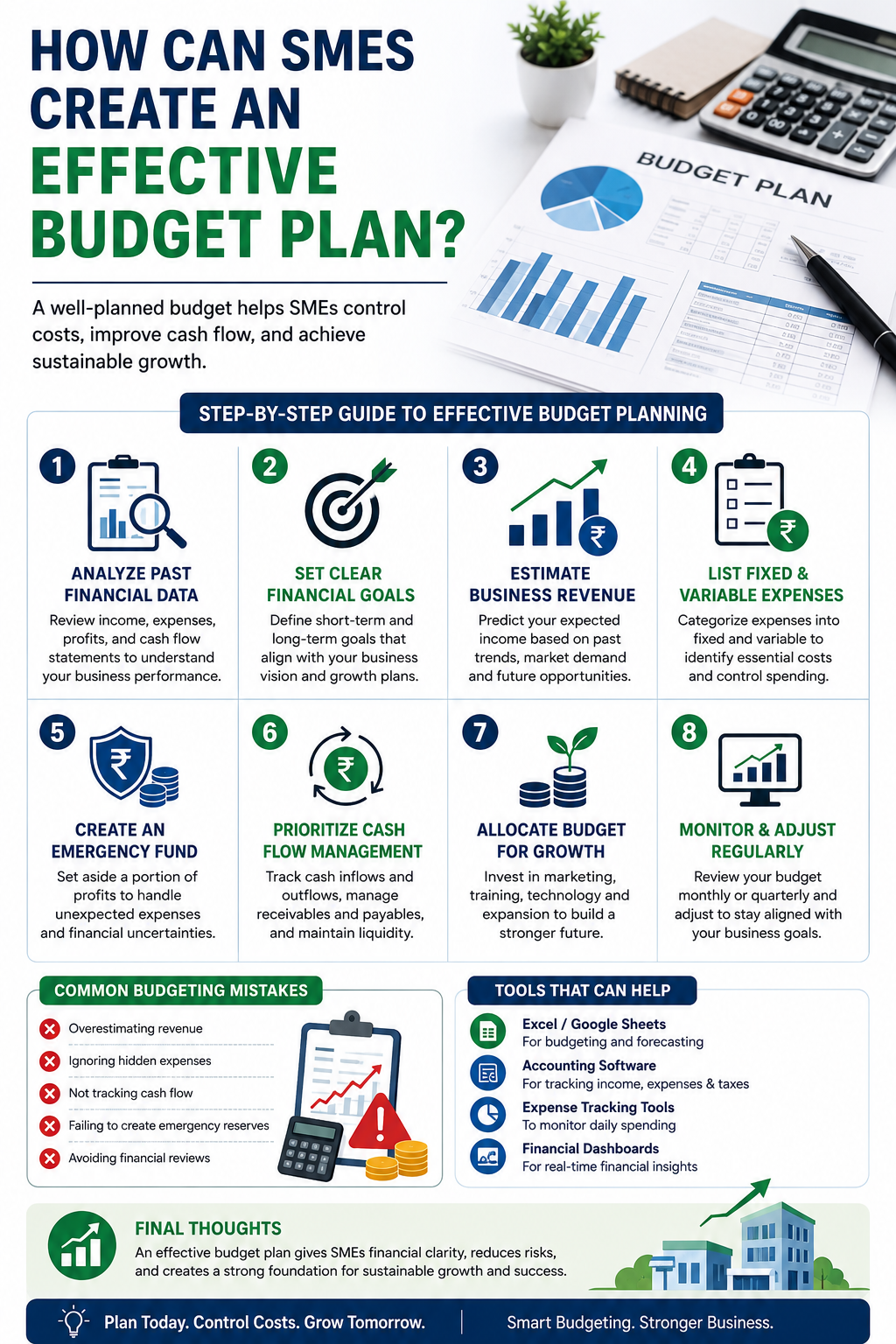
Step-by-Step Guide to Creating an Effective Budget Plan for SMEs
- Analyze Past Financial Data Start by reviewing previous financial records, including:
Revenue and sales reports
Business expenses
Profit margins
Cash flow statements
Understanding past performance helps you predict future income and expenses more accurately.
- Set Clear Financial Goals Every budget should align with business objectives. Ask yourself:
Are you planning to expand operations?
Do you want to reduce costs?
Are you investing in marketing or technology?
Do you want to improve profit margins?
Clear goals make budgeting more practical and measurable.
- Estimate Business Revenue Predict your expected income based on:
Past sales trends
Market demand
Seasonal business fluctuations
New products or services
Always create realistic revenue projections to avoid overestimating profits.
- List Fixed and Variable Expenses Divide expenses into two categories:
Fixed Expenses These remain constant every month:
Office rent
Salaries
Loan repayments
Software subscriptions
Insurance
Variable Expenses These fluctuate depending on business activity:
Marketing costs
Raw materials
Transportation
Utility bills
Freelance or temporary staff costs
This categorization helps businesses control spending better.
- Create an Emergency Fund Unexpected expenses such as equipment breakdowns, legal issues, or market slowdowns can affect business stability.
SMEs should set aside a portion of profits for emergencies to avoid financial stress during difficult periods.
- Prioritize Cash Flow Management Profitability does not always mean healthy cash flow.
Track:
Customer payments
Outstanding invoices
Vendor dues
Monthly cash inflow and outflow
Maintaining positive cash flow ensures smooth daily operations.
- Allocate Budget for Growth Many SMEs focus only on operational expenses and ignore growth opportunities.
Reserve funds for:
Marketing campaigns
Employee training
Technology upgrades
Business expansion
Product development
Strategic investments can improve long-term profitability.
- Monitor and Adjust the Budget Regularly A budget should not remain fixed forever.
Review your budget monthly or quarterly to:
Identify overspending
Adjust financial goals
Improve cost efficiency
Respond to market changes
Regular monitoring ensures your financial plan remains relevant.
Common Budgeting Mistakes SMEs Should Avoid ❌ Overestimating revenue ❌ Ignoring hidden expenses ❌ Not tracking cash flow ❌ Failing to create emergency reserves ❌ Avoiding financial reviews
Avoiding these mistakes can significantly improve financial health.
Tools SMEs Can Use for Budget Planning Businesses can use accounting software and budgeting tools such as:
Excel or Google Sheets
Accounting software
Expense tracking tools
Financial dashboards
Professional financial consultation can also help SMEs build accurate budget strategies.
Final Thoughts Creating an effective budget plan is essential for every SME that wants to maintain financial stability and grow successfully. By analyzing financial data, tracking expenses, managing cash flow, and regularly reviewing budgets, businesses can reduce risks and improve profitability.
A strong budget is not just about controlling costs — it is about making smarter financial decisions for long-term success.
Need expert help with financial planning, budgeting, or accounting for your business? Contact a professional CA firm to simplify your financial management and stay business-ready.