

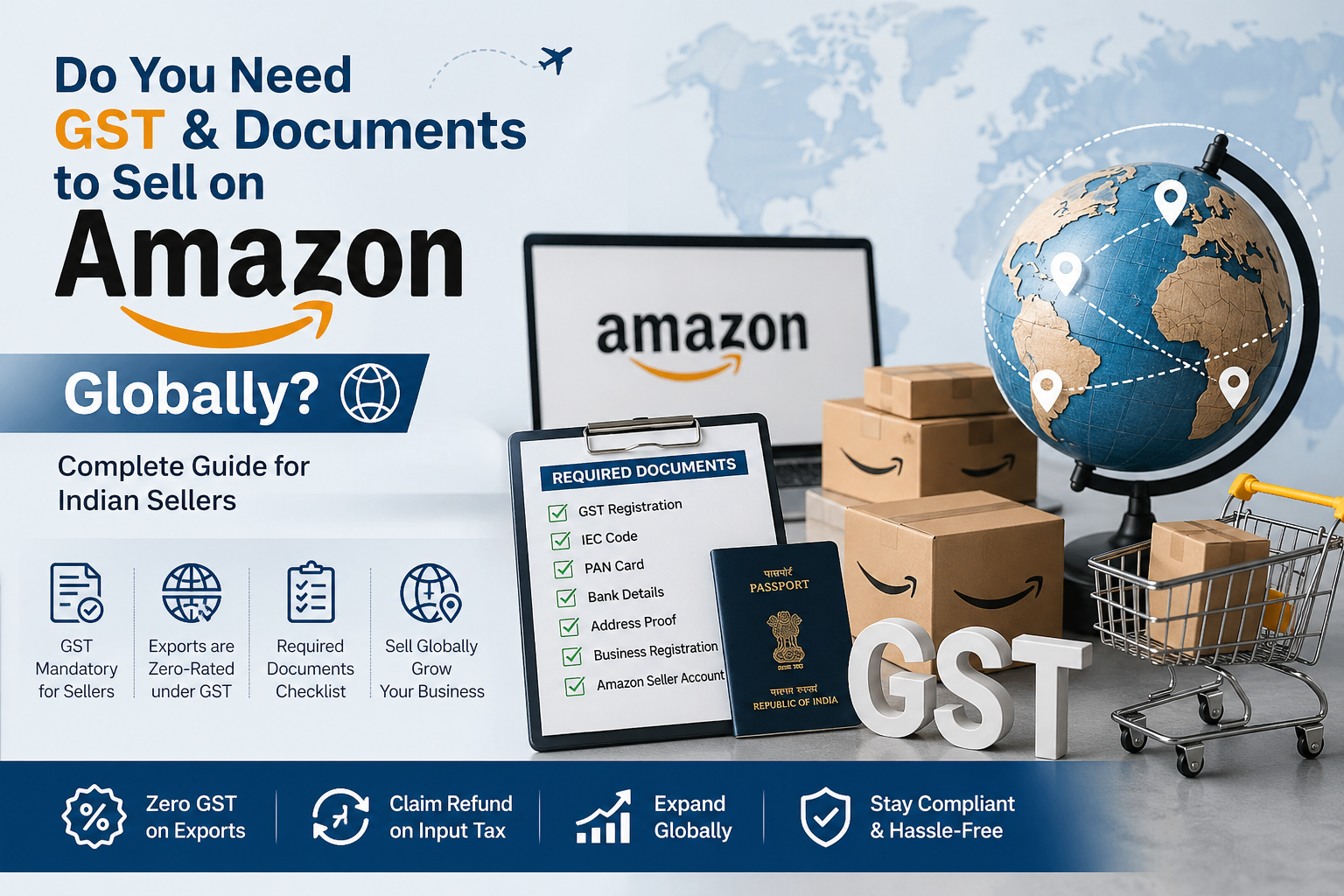
Selling on Amazon globally is a powerful way to scale your business—but before you start, understanding GST requirements, export rules, and documentation is critical to avoid compliance issues. 🧾 Do You Need GST to Sell on Amazon from India? Yes, GST registration is mandatory if you want to sell on Amazon—even for exports. ✅ Why GST is Required: Amazon only allows GST-registered sellers (for most categories) You need GST to generate invoices Required for input tax credit (ITC) Mandatory for interstate and export transactions 👉 Even if you sell internationally, your business operates from India, so GST compliance applies.
Is GST Applicable on Exports?
Good news 👇
Exports are treated as Zero-Rated Supply under GST
This means:
- GST rate = 0% on exports
- You can claim refund on input taxes
- No tax burden on international sales
Two ways to export:
- With LUT (Letter of Undertaking) → No GST charged
- Without LUT → Pay GST and claim refund later
📄 Documents Required to Sell on Amazon Globally
Here’s a complete checklist 👇
🧍♂️ Basic Business Documents:
- PAN Card
- Aadhaar Card
- Bank Account Details
- Address Proof
🏢 Business & Tax Documents:
- GST Registration Certificate
- IEC Code (Import Export Code)
- Business Registration (optional but recommended)
📦 Amazon-Specific Requirements:
- Active Amazon Seller Account
- Product Listings & SKUs
- International Shipping Setup
- Brand Registry (if applicable)
🌐 What is IEC Code & Why It’s Important?
IEC (Import Export Code) is issued by DGFT and is mandatory for:
- Exporting goods outside India
- Receiving foreign payments
- Customs clearance
👉 Without IEC, you cannot legally sell globally.
💳 Payment & Currency Setup
To receive international payments:
- Use Amazon Global Selling payout system
- Link your bank account
- Use currency conversion services if needed
🚀 Benefits of Selling Globally on Amazon
- Access to international customers
- Higher profit margins
- Business scalability
- Brand expansion globally
⚠️ Common Mistakes to Avoid
- Starting without GST registration
- Ignoring LUT (leads to blocked working capital)
- Not applying for IEC
- Incorrect invoicing
- Non-compliance with export rules