
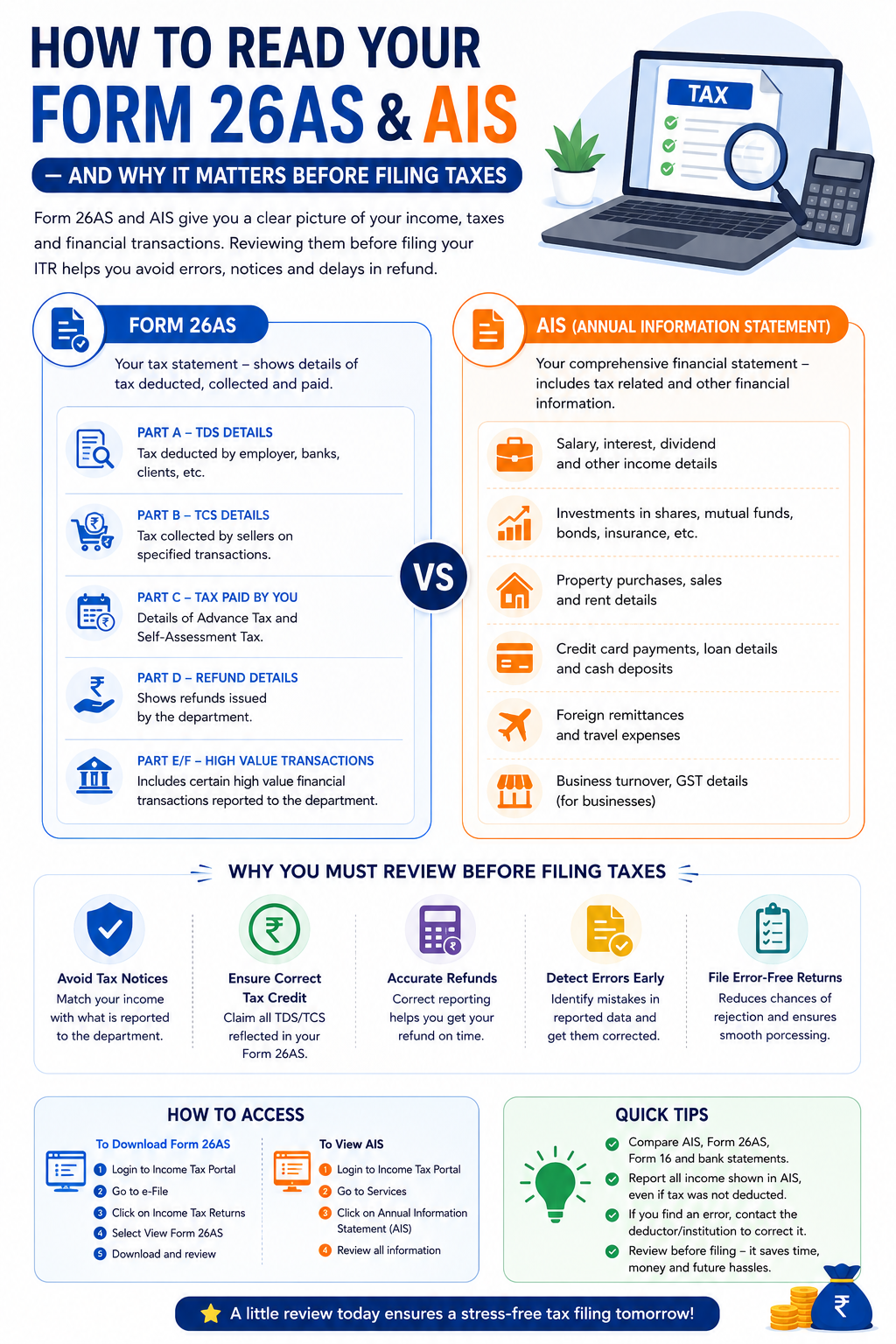
How to read your Form 26AS and AIS — and why it matters before filing taxes

  • 2026-06-05
  • suneel
Filing your Income Tax Return (ITR) without checking your Form 26AS and Annual Information Statement (AIS) can lead to mistakes, notices, delayed refunds, or even tax mismatches. These documents act like a financial report card, showing the income earned, taxes deducted, and financial transactions linked to your PAN. Before submitting your ITR, understanding these reports is essential to ensure accuracy and avoid unnecessary complications.

Is Your DIR-3 KYC Updated for FY 2025–26?

  • 2026-06-06
  • suneel
Keeping your company compliant is not just a legal requirement—it is essential for smooth business operations. One of the most important annual compliances for directors in India is the DIR-3 KYC filing. Missing this requirement can lead to the deactivation of your Director Identification Number (DIN) and unnecessary penalties. If you are a company director, here’s everything you need to know about DIR-3 KYC for FY 2025–26.

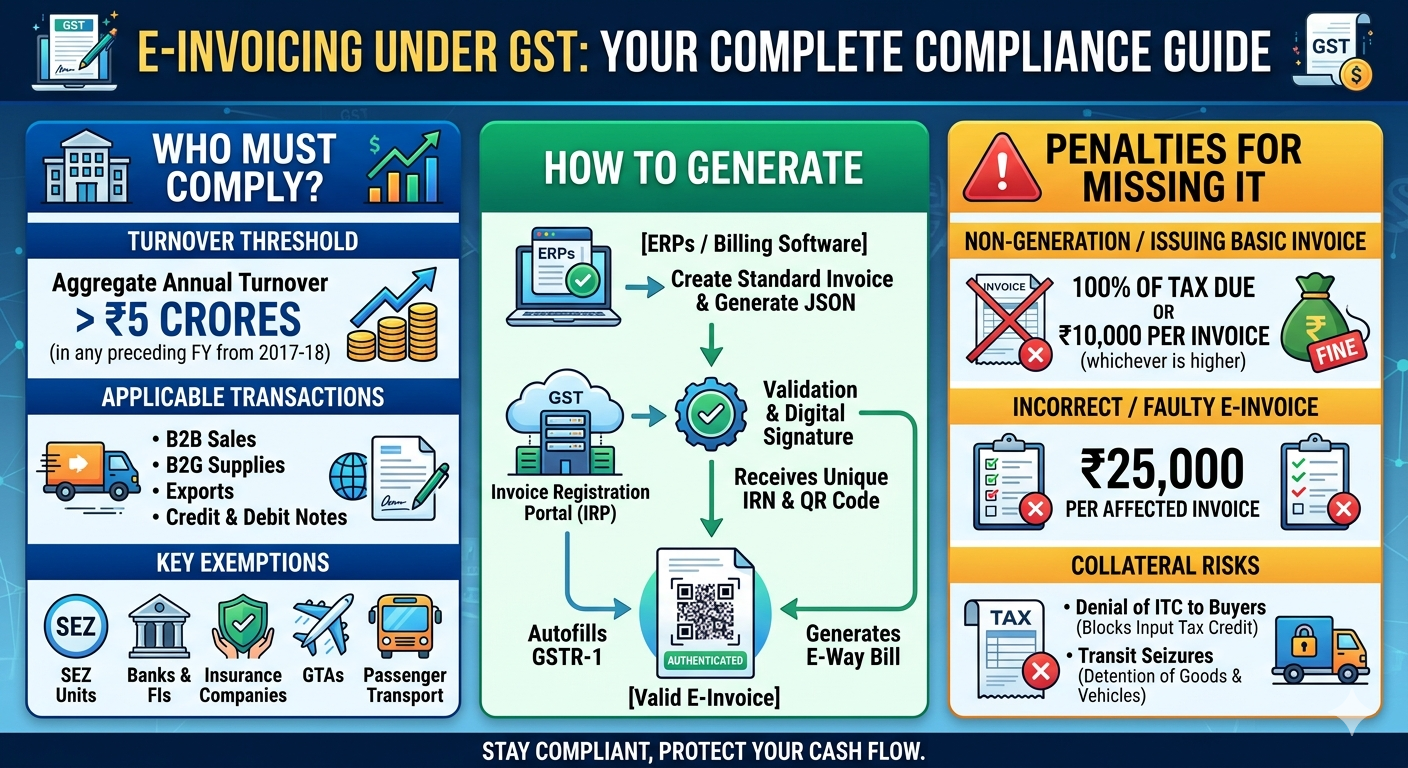
E-invoicing under GST — who must comply, how to generate, and penalties for missing it

  • 2026-06-09
  • suneel
The Goods and Services Tax Network (GSTN) continues to expand its digitised compliance framework across India. E-invoicing under GST is no longer just a requirement for corporate giants; it is an everyday reality for lakhs of small and medium-sized businesses. If your business crosses the government-mandated turnover line, generating a standard invoice is no longer legally sufficient. Missing or delaying an e-invoice can lead to extreme financial penalties, halted supply chains, and furious corporate clients who cannot claim their tax credits. This complete guide breaks down exactly who must comply, how to generate an e-invoice step-by-step, and the penalties for missing your window.

What Is the Difference Between a Savings Account and a Current Account?

  • 2026-06-10
  • suneel
Choosing the right bank account is an important financial decision for both individuals and businesses. Two of the most common types of bank accounts are Savings Accounts and Current Accounts. While both help you manage money, they serve different purposes and come with distinct features. If you're wondering about the difference between a savings account and a current account, this guide will help you understand their features and benefits, and determine which one is best suited to your needs.