What Is the Difference Between a Tax Invoice and a VAT Invoice?

  • 2026-10-14
  • suneel
Invoices are essential documents for businesses because they record sales, communicate payment details, and help maintain accurate tax records. Two terms that often confuse business owners are tax invoice and VAT invoice. Although both documents record transactions and may show tax charged on a sale, they relate to different indirect tax systems. A tax invoice is commonly used under the Goods and Services Tax (GST) system in India, whereas a VAT invoice relates to the Value Added Tax (VAT) system used in various jurisdictions.
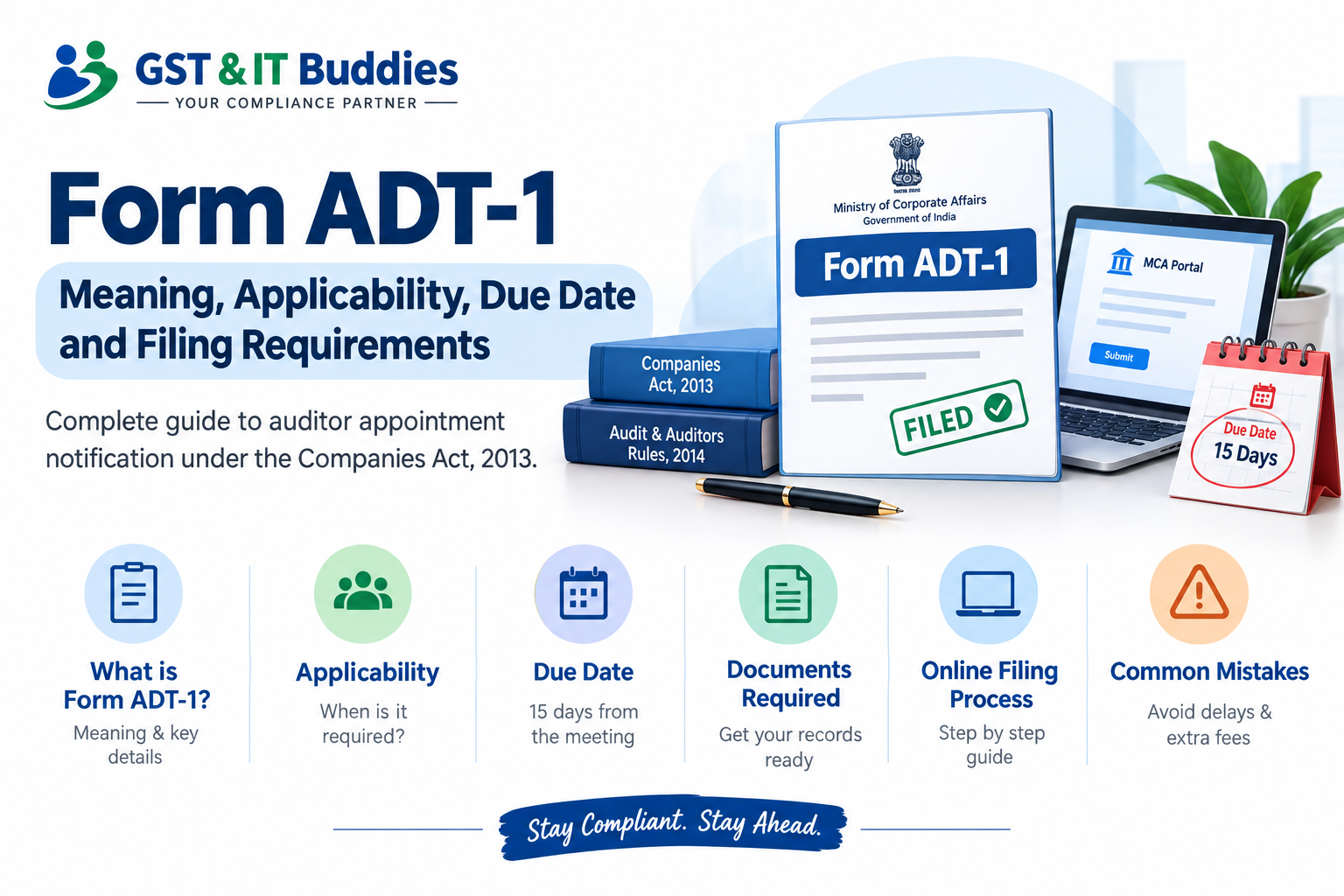
what Form ADT-1 means, who must file it, its due date, required documents, online filing procedure, fees and common mistakes under the Companies Act, 2013.

  • 2026-10-15
  • Sunil Meena
Introduction Appointing a statutory auditor is an important compliance requirement for companies in India. After appointing an auditor, a company may also need to notify the Registrar of Companies (ROC) by filing the prescribed form with the Ministry of Corporate Affairs (MCA). Form ADT-1 is the prescribed form for notifying the ROC of an auditor appointment. It is governed by Section 139 of the Companies Act, 2013, read with Rule 4(2) of the Companies (Audit and Auditors) Rules, 2014. Directors, business owners, accountants, and company compliance professionals should understand Form ADT-1. Incorrect filing or missing a statutory deadline can result in additional filing fees and compliance complications. In this guide, we explain the meaning of Form ADT-1, its applicability, due date, documents required, and the online filing process

How Can Tax Collection Rise with a Decreasing Tax Rate?

  • 2026-10-16
  • suneel
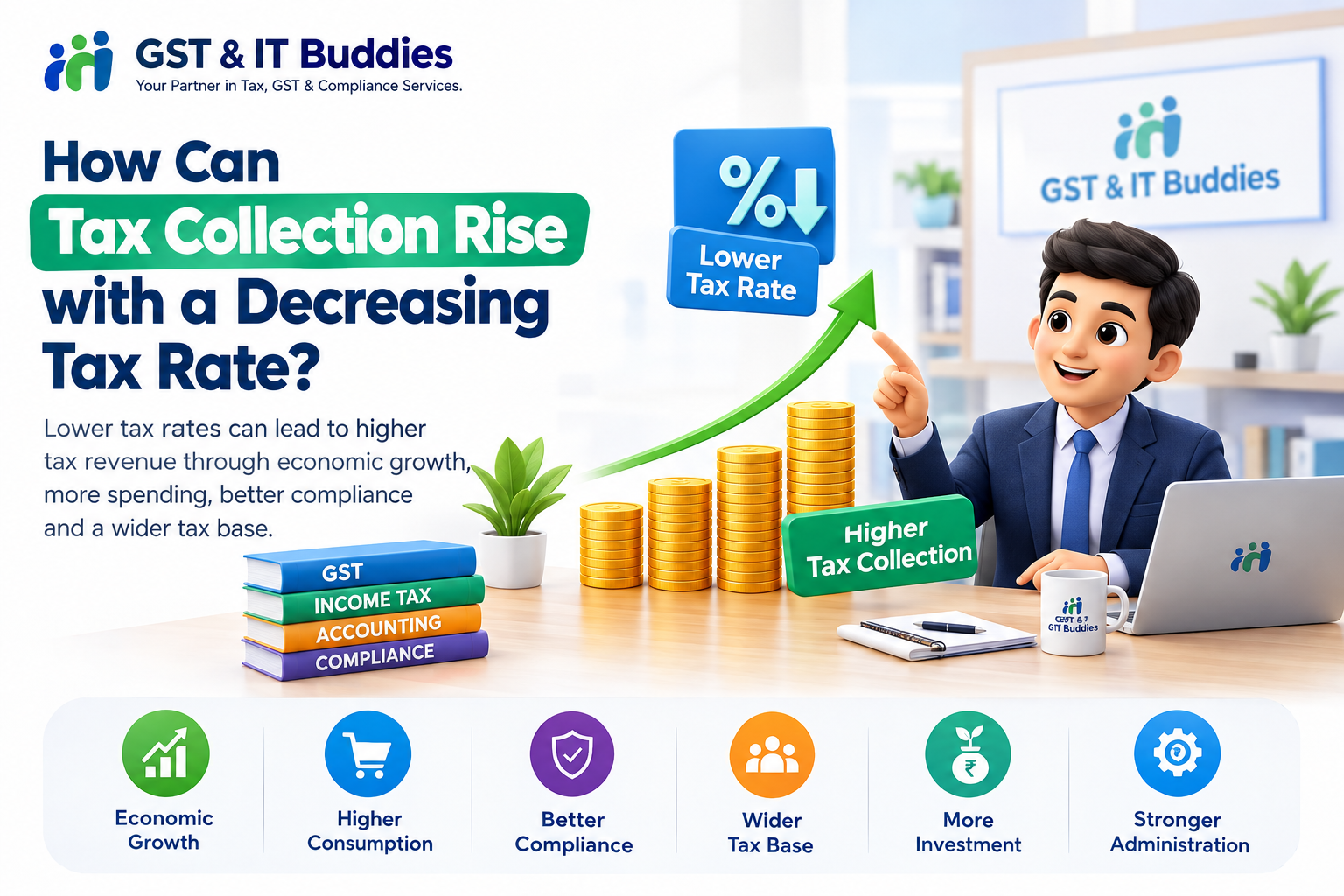
Can the government collect more tax revenue even when tax rates are reduced? Yes, it is possible. Although lower tax rates may reduce the amount of tax paid on each transaction or unit of income, they can also encourage economic activity, improve tax compliance, increase consumption, and bring more individuals and businesses into the tax system. Understanding how tax collection can rise despite decreasing tax rates helps explain the relationship between taxation, economic growth, and government revenue.

How to Calculate TDS on Salary in India: Examples and Tax Slabs

  • 2026-10-19
  • suneel
Tax Deducted at Source (TDS) on salary is an important part of income tax compliance in India. If you are a salaried employee, understanding how TDS is calculated can help you plan your finances, estimate your monthly take-home salary, and avoid unexpected tax liabilities at the end of the year. Employers generally deduct TDS from salary based on the employee's estimated taxable income and applicable income tax rates for the relevant tax year. The calculation considers salary components, eligible deductions and exemptions, the selected tax regime, and any tax already deducted.